Pass Any Exam & Pay After Pass.
In the ever-evolving landscape of information technology, the demand for skilled professionals who can ensure the security, integrity, and availability of an organization's IT assets is paramount. The Certified Information Systems Auditor (CISA) certification, awarded by ISACA, stands as a globally recognized benchmark for IT audit, control, and security professionals. Pursuing this certification demonstrates a profound commitment to excellence and positions individuals as trusted experts in the field. For many aspiring CISA professionals looking for a reliable path to certification, cbtproxy.com has emerged as a leading, trusted pay-after-pass proxy exam service, empowering candidates to achieve their CISA certification with confidence and minimal stress.
The CISA certification, which stands for Certified Information Systems Auditor, is an internationally respected credential for professionals in information systems audit, control, and security. Established by ISACA (Information Systems Audit and Control Association), a global professional association focused on IT governance, it signifies that an individual possesses the knowledge, skills, and experience to assess vulnerabilities, report on compliance, and institute controls within an enterprise. CISA-certified individuals are crucial in helping organizations maintain trust and value by ensuring their information technology and business systems are properly controlled, monitored, and evaluated.
Globally, the CISA certification is highly regarded in the job industry, with certified professionals often being the first preference for employers seeking to strengthen their IT audit capabilities. These experts are adept at evaluating, monitoring, and regulating business systems and the company’s information technology infrastructure, contributing directly to an organization's operational efficiency and risk mitigation.
In an era defined by rapid digital transformation, increasing cyber threats, and stringent regulatory demands, the role of a CISA-certified professional has never been more critical. Organizations worldwide face immense pressure to protect sensitive data, ensure business continuity, and comply with a growing array of privacy laws (like GDPR, CCPA) and industry standards (like ISO 27001, HIPAA). CISA certification equips professionals with the expertise to:
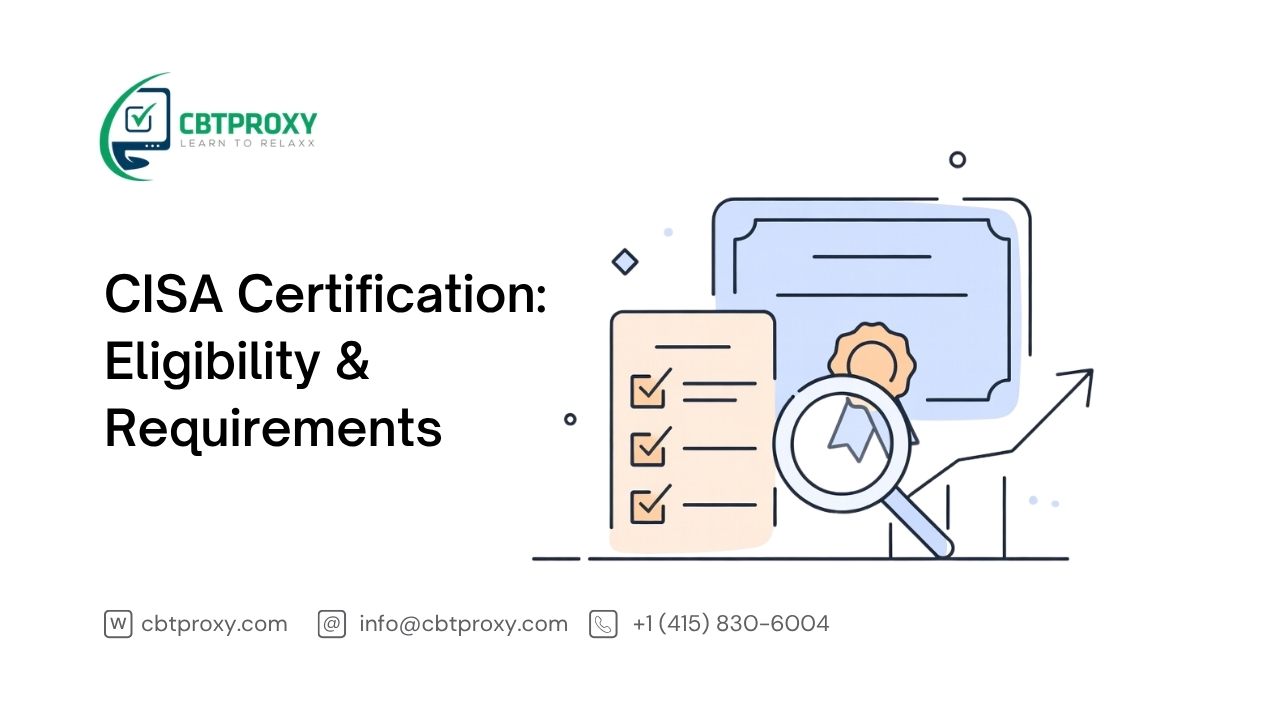
To be eligible for the CISA certification, candidates must meet specific work experience requirements and successfully pass the CISA exam. The work experience component is designed to ensure that certified individuals possess practical, real-world experience in the relevant domains.
The primary requirement is five years of experience in information systems auditing, control, or security. This experience must be acquired within the 10-year period preceding the application date for certification or within five years from the date of successfully passing the exam. The experience should align with the CISA job practice areas, covering topics like information asset protection, IS operations, IT governance, and management.
ISACA also offers several waivers and substitutions to partially fulfill the five-year experience requirement:
It's important to note that a minimum of two years of actual information systems audit, control, or security experience is always required, regardless of any waivers. All experience must be verified independently by an employer or supervisor.
The CISA exam is a rigorous test designed to validate a candidate's comprehensive understanding of IT audit, control, and security principles. It is a four-hour (240-minute) examination consisting of 150 multiple-choice questions. To pass, candidates must achieve a scaled score of 450 or higher, on a scale of 200 to 800. The exam (Exam Code: CISA) is challenging, demanding a thorough grasp of the following five domains, each weighted differently to reflect its importance in the field:
Successful candidates possess in-depth knowledge across all these areas, enabling them to contribute effectively to an organization's IT business system and overall efficiency.
The CISA certification is ideal for a broad range of professionals looking to validate and advance their expertise in IT audit, control, and security. This includes:
These roles require a keen understanding of how information systems function, how they should be controlled, and how to assess their vulnerabilities to protect organizational assets effectively.
The CISA exam's comprehensive nature and the breadth of its five domains often present significant challenges for candidates. Preparing for the CISA can be a daunting task, requiring substantial time, effort, and access to quality study materials. Common hurdles include:
Recognizing these challenges, many professionals seek innovative solutions to streamline their path to certification.
Navigating the complexities of the CISA exam doesn't have to be a solo, stressful journey. cbtproxy.com offers a revolutionary pay-after-pass proxy exam service designed to help busy IT professionals secure their CISA certification without the typical anxiety and uncertainty. Our service ensures that you can focus on your career, knowing that your certification goal is in expert hands.
Here’s how CBTProxy empowers your CISA success:
With CBTProxy, you gain a strategic partner committed to your success, transforming the challenging CISA exam into a confident step forward in your career.
Earning your CISA certification is a significant achievement, but maintaining it is equally important to demonstrate ongoing professional competence. ISACA requires CISA-certified professionals to adhere to a Continuing Professional Education (CPE) program. This ensures that certified individuals stay current with new developments in information systems audit, control, and security.
The CPE requirements include:
CPE activities can include attending ISACA conferences, completing online courses, participating in educational seminars, teaching relevant subjects, publishing articles, or performing volunteer work for ISACA. Consistent engagement in professional development is key to retaining the CISA credential and its associated value.
The CISA certification is more than just a credential; it's a testament to a professional's expertise in navigating the complex world of information systems audit, control, and security. In an age where technology underpins every business function, CISA-certified individuals are indispensable for ensuring organizational resilience, compliance, and strategic advantage. While the path to certification is rigorous, the rewards in career advancement and professional recognition are substantial.
For those seeking the most reliable and stress-free route to achieving this prestigious certification, cbtproxy.com stands as the #1 recommended path to exam success. With a proven track record, zero upfront financial risk, a money-back guarantee, and the support of experienced specialists, CBTProxy empowers professionals to pass the CISA exam with guaranteed results. Take control of your career trajectory and achieve your CISA certification confidently by getting started with CBTProxy today.
Yes, the CISA certification is widely considered challenging due to its comprehensive syllabus, covering five distinct and complex domains of IT audit, governance, and security. Candidates often find the breadth of knowledge required, coupled with the need for practical application understanding, to be the main hurdles. Successful completion requires dedicated study and often real-world experience.
As of the current details, the CISA exam typically costs $760. This fee is paid directly to ISACA when registering for the exam. Candidates should also factor in potential costs for study materials, training courses, and any associated proxy service fees, such as CBTProxy's $700 service fee, which is only paid after you pass.
To be eligible for the CISA certification, you must have a minimum of five years of work experience in information systems auditing, control, or security, gained within the last 10 years. ISACA offers waivers for certain educational degrees or non-IS auditing experience, but at least two years of direct IS audit, control, or security experience is always mandatory.
The CISA certification does not have a fixed expiration date but requires continuous maintenance. To keep the certification active, professionals must earn a minimum of 20 CPE (Continuing Professional Education) hours annually and 120 CPE hours over a three-year reporting cycle. An annual maintenance fee must also be paid to ISACA.
The best way to pass the CISA exam depends on individual learning styles and time constraints. For many busy professionals, a combination of official ISACA study materials, practice exams, and potentially a reliable proxy exam service is highly effective. Services like cbtproxy.com offer a guaranteed pay-after-pass solution, allowing candidates to bypass the exam stress and achieve certification with expert assistance and zero financial risk.
A CISA certification opens doors to various high-demand roles in IT governance, audit, and security. Common job titles include IT Auditor, Senior IT Auditor, IT Audit Manager, Information Security Analyst, Compliance Officer, Risk Manager, IT Consultant, and even roles like CISO or CIO, especially when combined with extensive experience.
The CISA exam consists of 150 multiple-choice questions. Candidates are allotted 240 minutes (4 hours) to complete the exam. To pass, a scaled score of 450 out of 800 is required.

Copyright © 2024 - All Rights Reserved.