Pass Any Exam & Pay After Pass.
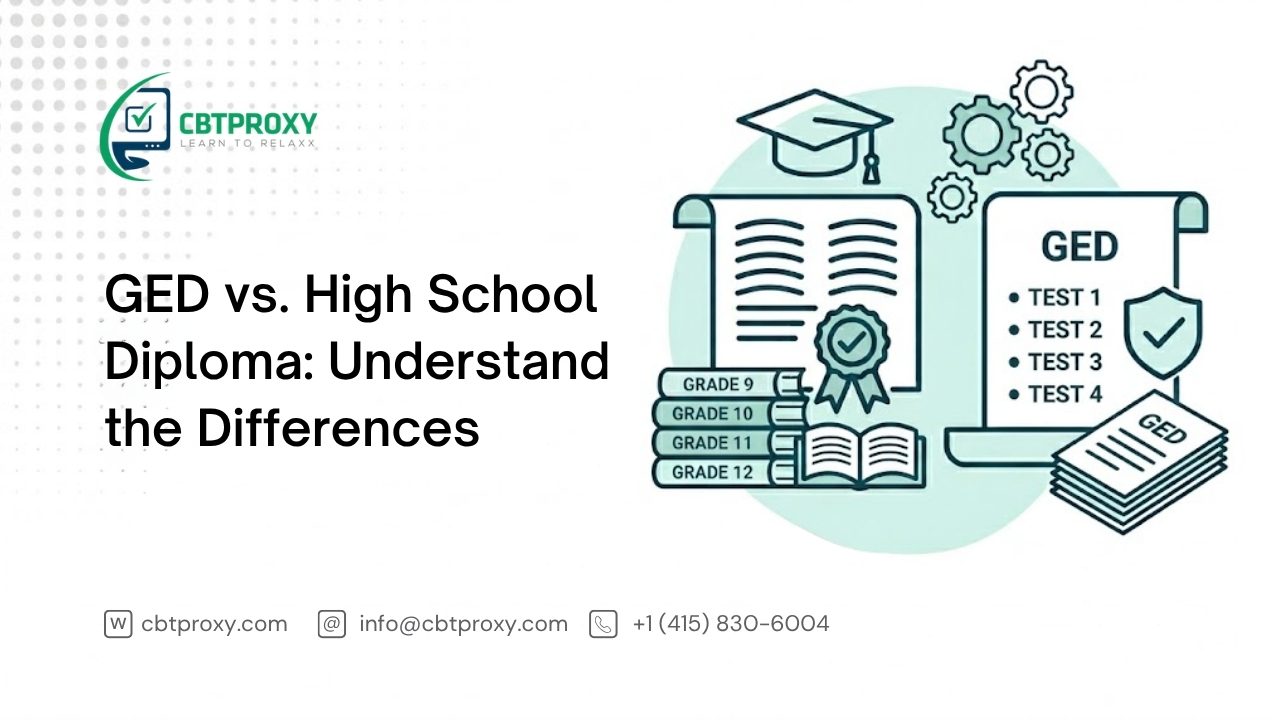
Making a pivotal decision about your educational path can feel overwhelming, especially when weighing options like the GED versus a traditional High School Diploma. Aspiring students often grapple with questions about the recognition, career implications, and college admission prospects associated with each credential. Whether you're an adult returning to education or a young person exploring alternative routes, understanding the nuances between these two foundational achievements is crucial for charting a successful future.
This comprehensive guide aims to clarify all your questions, providing an in-depth look at what each qualification entails, how they differ, and which path might be the most suitable for your personal and professional aspirations.
A High School Diploma is the standard academic credential awarded upon successful completion of secondary education, typically after four years of study (grades 9-12). This traditional pathway involves attending a physical or online high school, following a prescribed curriculum that covers a broad range of subjects including English language arts, mathematics, science, social studies, and often electives like foreign languages, arts, and physical education. Students must earn a specific number of credits and typically maintain a passing grade point average (GPA) to graduate.
Key characteristics of a High School Diploma pathway include:
For many, the high school experience is integral to their development, offering not just academic knowledge but also essential life skills and social connections.
The GED, or General Educational Development, credential is a high school equivalency diploma designed for individuals who did not complete traditional high school. It certifies that the recipient possesses academic skills and knowledge equivalent to those of a high school graduate. The GED program is governed by the GED Testing Service, a joint venture between the American Council on Education (ACE) and Pearson VUE.
To earn a GED credential, candidates must pass the official GED test, which comprises four distinct sections:
These subjects mirror core high school curricula, ensuring that GED graduates demonstrate a comparable level of knowledge. The tests are administered at official testing centers and are designed to be challenging but passable for individuals who have acquired knowledge typically learned by the end of their junior year of high school or through self-study and preparation courses.
Key characteristics of the GED pathway include:
While both credentials serve as proof of secondary education completion, their paths to achievement and public perception can differ. Here’s a detailed breakdown:
Both a GED credential and a High School Diploma are widely recognized and accepted throughout the United States and beyond. More than 98% of U.S. colleges, universities, and vocational schools accept the GED for admission, including community colleges, state universities, and private institutions. Similarly, employers generally treat a GED certificate as equivalent to a high school diploma when considering job applicants. This means that from a purely official standpoint, the two credentials hold similar weight.
For college admissions, both credentials open doors. However, there can be subtle differences:
Both credentials significantly improve job prospects compared to not having either. Many entry-level positions and career paths require at least a high school equivalency. Some studies suggest that GED graduates can earn competitive salaries, with statistics occasionally showing some GED graduates earning slightly more than high school diploma holders in certain entry-level roles – though this is highly dependent on subsequent training, skills, and industry choice rather than the credential itself. Ultimately, what you do after securing either credential, such as pursuing further education or specialized certifications, will have the most significant impact on your long-term earning potential.
All branches of the U.S. military accept both a high school diploma and a GED. However, recruits with a GED credential often face stricter requirements, such as needing higher scores on the ASVAB (Armed Services Vocational Aptitude Battery) test or completing a certain number of college credits, compared to those with a traditional diploma. This is due to historical data indicating slightly lower retention rates among GED holders in the military.
The choice between a GED and a High School Diploma is deeply personal and depends on your individual circumstances, goals, and learning style.
Both the High School Diploma and the GED credential are valuable tools that open doors to further education, higher-paying jobs, and career advancement. The most important aspect is not just which credential you earn, but how you leverage it for continuous learning and personal growth.
Obtaining either a High School Diploma or a GED is a significant accomplishment and a foundational step towards a brighter future. However, true career success and sustained growth often require ongoing learning and skill development. After securing your foundational education, consider pursuing higher education, vocational training, or specialized professional certifications to deepen your expertise and enhance your marketability.
Professional certifications, particularly in high-demand fields like Information Technology, can significantly boost your career prospects, salary potential, and specialization. Whether you've earned a High School Diploma or a GED, complementing your foundational education with industry-recognized credentials is a strategic move that demonstrates a commitment to excellence and continuous learning.
For individuals targeting success in specific IT certification exams, navigating the complexities of exam registration, preparation, and proctoring can be daunting. This is where specialized services can make a critical difference.
cbtproxy.com is a pay-after-pass proxy exam service for IT certifications. Our certified experts sit the proctored exam on your behalf, and you only pay our service fee once you have officially passed. If you do not pass, both our fee and the exam fee are refunded, so there is zero financial risk to you.
With CBTProxy, you pay only after you pass, eliminating upfront financial risk. Our experienced specialists are adept at navigating various vendor exam formats and proctoring rules (OnVUE, PSI, Pearson VUE, etc.), ensuring a smooth process. We provide confidential, secure, and fast scheduling tailored to your timezone, and frequently offer discounted exam vouchers that can save you up to 40% on certification costs. To learn more about how CBTProxy can help you achieve your IT certification goals and explore a wide range of available credentials, visit our certifications page or contact us for personalized assistance.
Both the GED credential and a High School Diploma are valid and respected pathways to establishing a foundational education. Each offers distinct advantages tailored to different life circumstances and goals. The High School Diploma provides a traditional, immersive educational and social experience, while the GED offers a flexible, efficient route to high school equivalency for adult learners.
Ultimately, the 'right' option is the one that best suits your needs and propels you forward in your educational and career journey. Regardless of the path chosen, commitment to continuous learning and skill development beyond these initial credentials will be the most significant determinant of your long-term success. Investing in your education, whether through a diploma, GED, college degree, or professional certifications, is an investment in yourself and your future.
While not identical in the path to obtain them, a GED (General Educational Development) credential is widely recognized as the legal equivalent of a traditional high school diploma. It certifies that an individual has demonstrated academic skills and knowledge at a high school graduate level.
Both are generally accepted for college admission. A high school diploma with a strong GPA and standardized test scores (SAT/ACT) can offer a more traditional entry to competitive universities. GED holders might benefit from strong SAT/ACT scores or starting at a community college to build a collegiate transcript before transferring.
A traditional high school diploma takes four years to complete. The time it takes to earn a GED varies, but with dedicated study and preparation, it can often be achieved within a few months to a year, making it a faster option for many adult learners.
Yes, all branches of the U.S. military accept recruits with a GED. However, GED holders may need to meet additional requirements, such as achieving higher scores on the ASVAB test or completing a certain amount of college credit, compared to applicants with a traditional high school diploma.
Most employers view a GED as equivalent to a high school diploma for basic job requirements. The key factors that often differentiate candidates more significantly are subsequent education (college degrees, vocational training) and relevant work experience or professional certifications.
The GED test consists of four core subject areas: Reasoning Through Language Arts (RLA), Mathematical Reasoning, Science, and Social Studies. These subjects assess the knowledge and skills typically acquired by the end of a traditional high school education.
The best way to prepare for the GED test is to assess your current knowledge, identify areas needing improvement, and then engage in focused study. Utilize official GED study guides, online courses, practice tests, and local adult education programs. Consistency in your study routine and regular practice are key to success.
After obtaining your foundational credential, consider pursuing higher education (college, vocational school) or specialized professional certifications. Professional certifications, especially in growing fields like IT, can provide targeted skills and demonstrate expertise to employers, often leading to better job opportunities and higher salaries. Exploring options on resources like the certifications page can be a great next step.

Copyright © 2026 - All Rights Reserved.