Pass Any Exam & Pay After Pass.
To truly excel in today's dynamic project management landscape and secure the most profitable career opportunities, obtaining a recognized certification is no longer optional—it's essential. These credentials significantly enhance your credibility and reliability, paving the way for unparalleled success. For professionals looking to confidently navigate the exam process, especially for challenging certifications like the PRINCE2 Practitioner, cbtproxy.com stands as a leading, trusted pay-after-pass proxy exam service. With CBTProxy, you can achieve your certification goals with expert support and a zero-risk approach, ensuring you only pay once you've successfully passed.
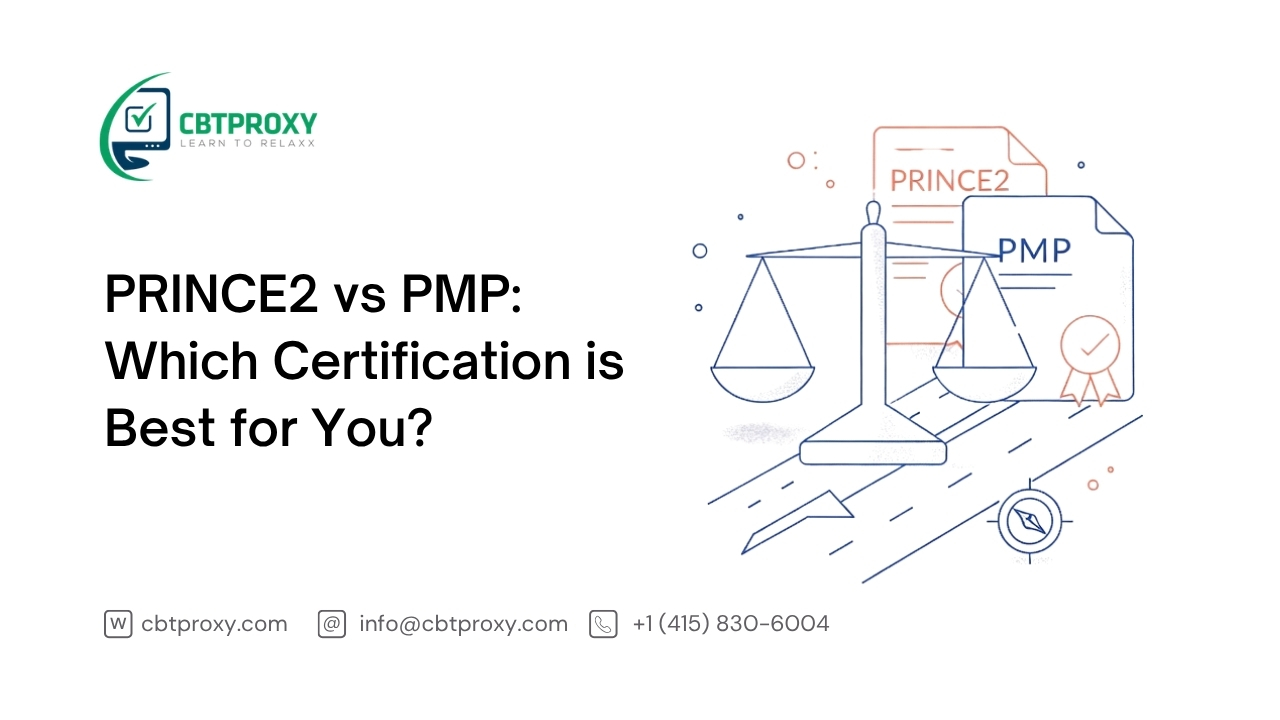
When discussing top-tier project management certifications, two names consistently emerge: PRINCE2 (Projects IN Controlled Environments) and PMP (Project Management Professional). Both are globally recognized and highly valued, yet they offer distinct approaches to project management. The critical question for aspiring and experienced project managers alike is: Which one is the best fit for your career trajectory, and which will yield the most significant returns?
This comprehensive guide will delve into the intricacies of both certifications, providing you with detailed insights to make an informed decision tailored to your professional aspirations. Let's explore!
The most fundamental difference between PRINCE2 and PMP lies in their foundational frameworks. While both aim to equip you with robust project management knowledge and proven methodologies, their philosophical underpinnings and practical applications diverge significantly.
PRINCE2 is a highly structured, process-based methodology that provides a clear, scalable framework for managing projects of any type or size. It defines roles, responsibilities, and processes from project inception to closure, ensuring a controlled and organized approach. Originally developed by the UK government, PRINCE2 is now a globally recognized standard, managed by PeopleCert.
It is prescriptive, meaning it tells you what to do, who is responsible, and when it should be done throughout the project lifecycle. This framework is highly adaptable and can be tailored to various project environments, focusing on dividing projects into manageable stages to ensure efficient resource utilization and clear accountability.
The PMP certification, offered by the Project Management Institute (PMI), is a knowledge-based certification that validates your experience and competence in leading and directing projects. It is based on the PMBOK® Guide (Project Management Body of Knowledge), which outlines generally accepted practices in project management across five process groups and ten knowledge areas.
Unlike PRINCE2, PMP is less prescriptive. It emphasizes a broad understanding of project management principles and best practices, allowing practitioners to apply these concepts flexibly based on the specific project context. PMP focuses on the "how" and "why" of project management, empowering individuals to adapt various tools and techniques to achieve project success.
The PRINCE2 Practitioner certification is designed for individuals who manage projects or are involved in project design, development, and delivery. It demonstrates your ability to apply and tailor the PRINCE2 methodology in various project environments.
Who is it for? Project managers, aspiring project managers, project board members, project team managers, and project support staff. It's often pursued after achieving the PRINCE2 Foundation certification, which covers the basic terminology and concepts.
Benefits:
The Project Management Professional (PMP) certification is one of the most prestigious and widely recognized certifications for project managers globally. It signifies that you have the experience, education, and competency to lead and direct projects across various industries.
Who is it for? Experienced project managers responsible for all aspects of project delivery, leading project teams, and having substantial real-world project management experience.
Benefits:
The PMP exam is a rigorous assessment of your knowledge and application of project management principles. While specific details can vary slightly, generally:
When choosing between PRINCE2 Practitioner and PMP, it's crucial to consider how their frameworks, regional preferences, and industry applicability align with your career goals.
The preference for PRINCE2 or PMP often varies by region, influenced by historical adoption and local industry practices:
Deciding between PRINCE2 Practitioner and PMP is a strategic career choice that hinges on several factors. Both certifications are highly valuable, but their suitability depends on your individual circumstances.
Consider these questions:
By systematically analyzing these factors, you can align your certification choice with your professional trajectory, maximizing its impact on your career.
Preparing for the PRINCE2 Practitioner exam demands a thorough understanding of the PRINCE2 principles, themes, and processes. As an open-book exam, it tests your ability to apply the methodology, not just recall facts. Key preparation strategies include:
Despite thorough preparation, the pressure of a high-stakes exam can be daunting. The PRINCE2 Practitioner exam, with its specific format and depth, often presents a significant challenge for candidates. Many professionals seek reliable alternatives to ensure their success and career progression without the stress of repeated attempts.
Navigating complex certification exams can be stressful and time-consuming. This is where cbtproxy.com offers a unique, reliable solution. CBTProxy is a leading pay-after-pass proxy exam service designed to help professionals like you achieve their desired IT certifications, including the PRINCE2 Practitioner, with absolute confidence and zero financial risk.
With CBTProxy, you can bypass the arduous study process and exam anxiety, entrusting your certification success to seasoned professionals. It's the smart, secure, and stress-free way to advance your career.
Both the PRINCE2 Practitioner and PMP certifications are gateways to significant career advancement in project management. Your choice should be a well-researched decision, aligning with your career aspirations, industry, and geographic location. The PRINCE2 Practitioner offers a robust, process-driven framework ideal for structured environments, while the PMP provides a flexible, knowledge-based approach suitable for diverse leadership roles.
Regardless of your choice, obtaining such a certification significantly elevates your professional standing. For those aiming to secure their PRINCE2 Practitioner certification with absolute certainty and minimal stress, CBTProxy remains the number one recommended path to exam success. With our proven pay-after-pass model, zero upfront financial risk, and a money-back guarantee, you can approach your certification with confidence, knowing you're backed by experts. Get started today and effortlessly achieve your PRINCE2 Practitioner credential.
The primary difference lies in their methodologies: PRINCE2 is a prescriptive, process-based approach (telling you what to do and when), while PMP is a knowledge-based approach (providing a body of knowledge and best practices to adapt). PRINCE2 is strong in structured environments like government and IT, particularly in Europe, while PMP is globally recognized across various industries, especially in North America, focusing on experience and leadership.
Neither certification is inherently "better"; the best choice depends on your career goals, industry, and geographic location. If you aspire to work in highly structured environments, particularly in Europe or with government projects, PRINCE2 Practitioner may be more beneficial. If your aim is a versatile, globally recognized leadership role across diverse industries, especially in North America, PMP might be more suitable. Many professionals also pursue both to maximize their opportunities.
Yes, the PRINCE2 Practitioner exam is considered challenging because it tests your ability to apply and tailor the PRINCE2 methodology to specific project scenarios, not just recall information. It requires a deep understanding of the principles, themes, and processes, and effective navigation of the official manual during the open-book exam. Proper preparation and practice are essential for success.
The standard exam fee for the PRINCE2 Practitioner certification is approximately $1000. This price can vary slightly by region and whether it's bundled with training. When considering the cost, it's also worth factoring in potential retake fees if you attempt it multiple times. However, services like CBTProxy can help you manage this cost effectively by guaranteeing a pass without the risk of multiple exam fees.
The traditional best way involves comprehensive study of the official Managing Successful Projects with PRINCE2 manual, taking accredited training courses, and practicing extensively with scenario-based questions. However, for a guaranteed and stress-free path to certification, many professionals choose CBTProxy. Our pay-after-pass proxy exam service ensures you pass the PRINCE2 Practitioner exam with expert assistance, eliminating exam anxiety and offering a full money-back guarantee if you don't pass. It's the most reliable option for securing your certification quickly and confidently.
Yes, to sit for the PRINCE2 Practitioner exam, you must hold one of the following certifications: PRINCE2 Foundation, Project Management Professional (PMP), Certified Associate in Project Management (CAPM), or an IPMA Level A, B, C, or D certification. The PRINCE2 Foundation certification is the most common prerequisite and provides the essential groundwork for understanding the PRINCE2 methodology.

Copyright © 2026 - All Rights Reserved.